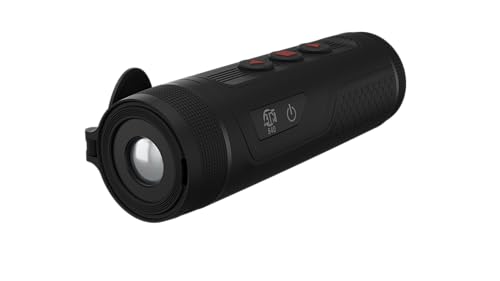
640-class handheld observation without laser ranging
This model’s ranging menu is an estimate, not a laser measurement. ATN’s page also contains conflicting runtime statements, so a specific endurance figure is withheld pending exact model clarification.
The buying decision
The 619 is worth comparing when you want a higher native detector count without choosing a heavily magnified starting view. ATN's sixth-generation selector lists 1.5× at the bottom of this model's range, below the 319's 2.25×. That makes the upgrade more interesting than a simple resolution ladder: the two configurations approach initial viewing differently, and either may fit a particular observation routine better.
Do not judge that decision through digital zoom alone. Start with a clip at base magnification and ask how much useful context surrounds the subject. Then look at an enlarged portion and decide whether it adds information you need. A 640-class sensor creates a different sampling budget from a 384-class one, but the full result still includes optics, processing, conditions and the subject itself. We have not field-tested these models.
The built-in battery is relevant for ownership planning. The current product body and inherited FAQ do not give a fully consistent runtime description for this exact version, so our normalized endurance field stays blank. If a long uninterrupted session is essential, ask ATN for the current 619 specification and confirm the intended external-power arrangement instead of relying on the longest family-level claim.
For a focused shortlist, compare the 619 with the 319 on image needs, then compare it with a Titan T6 if laser ranging matters. The BlazeTrek manual's size-based distance tool answers a different question from a laser rangefinder. Choosing the right category first helps prevent paying for one feature while expecting another, particularly when product titles and family pages share similar wording.
Documented specifications
| Specification | Published detail |
|---|---|
| Detector | 640×512 |
| Magnification | 1.5–12× listed |
| Battery | Internal rechargeable |
| Rated runtime | Conflicting official page statements; not normalized |
Published specifications are manufacturer or exact-listing claims, not our measurements. “Not confirmed” fields are left out of numeric recommendations.
Useful alternatives
Make sense of the differences
Practical guideThermal Monoculars Under $2,000: What Is Worth Paying More For?
Compare four thermal monoculars above the entry budget: Pulsar XQ30 Pro, AGM ReachIR 35-640, RIX Titan T3, and ATN BlazeTrek 6 619.
Learn384 vs 640 Thermal Sensors: What the Extra Pixels Buy
Understand native thermal resolution, field of view, cropping, and why a 640 sensor is not an automatic long-range identification guarantee.
Sources & specifications
Source details checked September 10, 2026. Published claims are not independent test measurements.